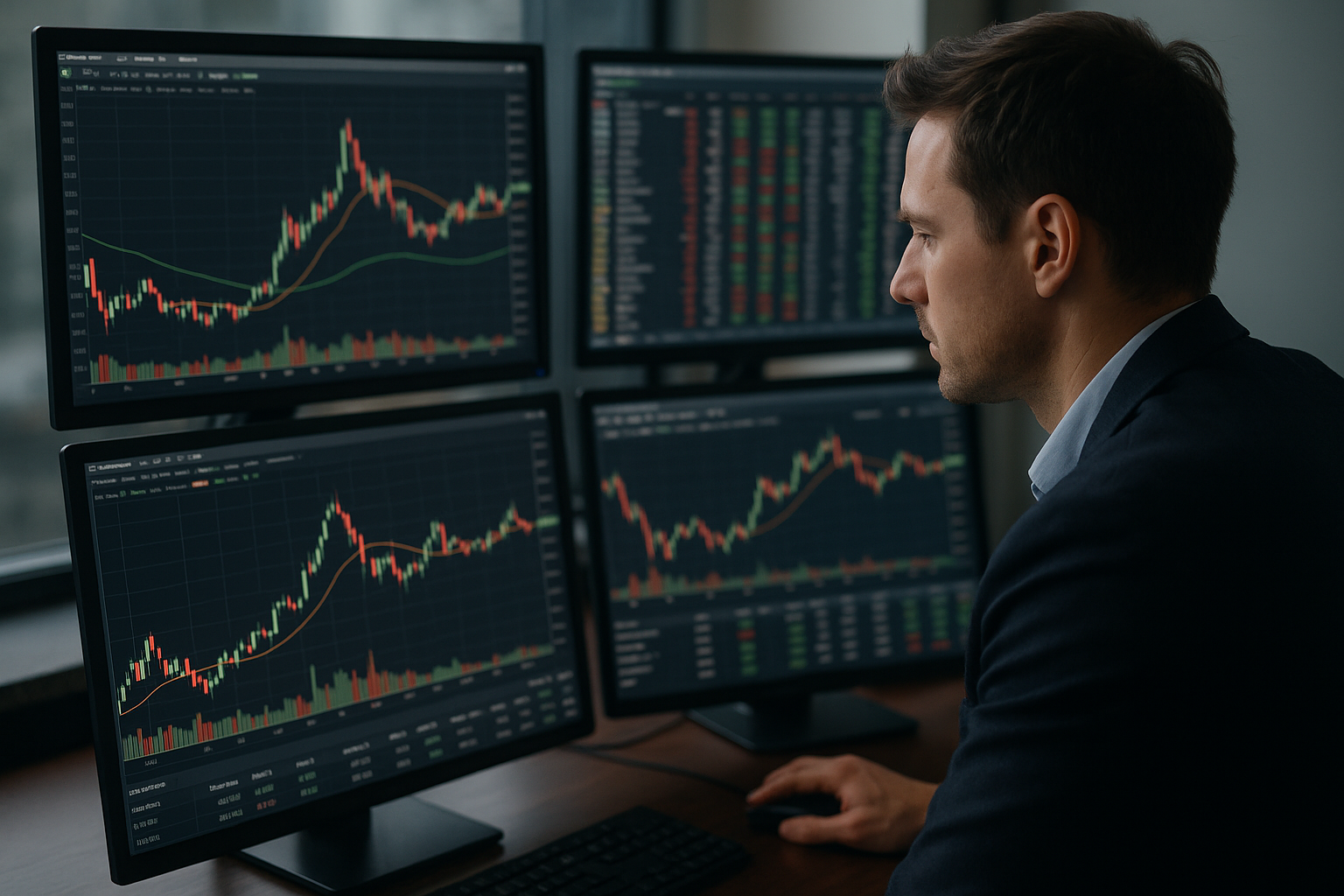
Trading has always been about making smart decisions under pressure, but most traders struggle with the same challenge: tracking what actually works. Without a clear record of your trades, patterns, and results, you're essentially flying blind. That's where Apex Flow Trade comes in. This platform transforms the way active traders manage their performance by combining a professional trading journal with artificial intelligence that learns from your decisions and reveals opportunities you might otherwise miss.
In 2026, professional-grade trading analytics is no longer reserved for institutional investors or traders with large teams. Apex Flow Trade brings institutional-level performance tracking and AI-powered insights directly to your desktop or mobile device, making it practical to understand your strengths, refine your strategy, and make better trading decisions every single day. Whether you're scaling your results or just getting serious about tracking performance, this platform is built to grow with you.
| Feature | Apex Flow Trade | Standard Journals |
|---|---|---|
| AI Analytics | ✓ Real-time pattern detection | ✗ Manual review only |
| Performance Dashboard | ✓ Complete metrics & visual reports | ✗ Basic spreadsheet view |
| Risk Management Tools | ✓ Position sizing & drawdown analysis | ✗ Not included |
| Ease of Use | ✓ Intuitive interface, quick setup | ✗ Steep learning curve |
| Mobile Access | ✓ Full functionality on mobile | ✗ Limited or unavailable |
Key Takeaway
Apex Flow Trade is the trading journal that doesn't just store your data—it analyzes it, learns from it, and shows you how to trade smarter. With AI-powered insights, professional-grade analytics, and a user-friendly design, you get the tools of a top-tier trading firm without the complexity.
What Is Apex Flow Trade and How Does It Work?
Understanding the Core Features of Apex Flow Trade
Apex Flow Trade is a cloud-based trading journal and performance analytics platform designed to give you complete visibility into your trading activity. Instead of manually tracking trades in a spreadsheet or notebook, you log your trades into Apex Flow Trade and the platform automatically organizes, analyzes, and visualizes every aspect of your performance.
The platform connects directly to your trading accounts or accepts manual entry, so whether you trade stocks, forex, cryptocurrencies, or futures, your data flows seamlessly into one unified dashboard. Once your trades are recorded, Apex Flow Trade's AI engine goes to work. It calculates your win rate, average profit per trade, risk-to-reward ratios, drawdowns, and dozens of other metrics that matter. The real magic happens when the AI identifies patterns in your trading—which setups work best for you, which times of day produce your strongest results, which market conditions align with your wins.
Think of it as having a personal trading coach who reviews every decision you make, remembers every outcome, and points out the patterns you might miss on your own. The interface is clean and intuitive, so you're not wrestling with confusing menus or technical jargon. You simply log your trades, and the data tells your story.
Key Benefits for Active and Professional Traders
For active traders, Apex Flow Trade delivers three foundational benefits that change how you approach your craft.
First, you gain clarity. Many traders discover they're not actually making money on their best setups, or they're losing more during certain market conditions than they realized. Apex Flow Trade shows you exactly where your money comes from and where it goes. This clarity alone helps you stop repeating losing patterns and double down on what works.
Second, you save enormous amounts of time. Instead of spending hours each week analyzing your trades manually, the platform does the heavy lifting for you. You log a trade in seconds, and within moments you have updated analytics on your dashboard. For a trader managing dozens or hundreds of trades per month, this time savings translates directly into more hours available for market research, strategy development, or simply trading with a clear head.
Third, you trade with confidence backed by data. When you can see that your breakout strategy wins 62% of the time with an average 3:1 risk-to-reward ratio, you trade that setup with conviction. When you spot that your losses cluster in the first 30 minutes of market open, you can adjust your schedule. This data-driven confidence replaces guesswork with strategy.
How to Set Up and Optimize Your Apex Flow Trade Account
Getting Started: Initial Setup and Configuration
Setting up Apex Flow Trade takes just minutes. After creating your account, you'll connect your trading broker or choose manual entry mode. The platform supports direct integration with most major brokers, so your trades can sync automatically without any extra work from you. If your broker isn't supported, manual entry is straightforward and takes only seconds per trade.
Once connected, you'll configure your basic settings: your trading account size, your risk tolerance, and your trading style (day trading, swing trading, position trading, etc.). The platform uses these settings to calibrate its recommendations and adjust how it presents your analytics. You can also customize which metrics matter most to you, set up alerts for certain performance thresholds, and choose how you want to receive reports.
The onboarding is guided, so if you're not sure what each setting means, Apex Flow Trade walks you through it with clear explanations. You're ready to log trades and start seeing insights within your first trading session.
Best Practices for Maximizing Trading Journal Accuracy
The quality of your insights depends entirely on the quality of your data. A few simple habits ensure your journal stays accurate and useful.
Log your trades immediately or as soon as reasonably possible. The sooner you record a trade after it closes, the fresher your memory of your reasoning and emotions. This detail, captured in the trade notes section, becomes gold when you review patterns later. Include why you took the trade, what setup triggered it, and any observations about market conditions or your mental state.
Be consistent with your labeling. If you tag trades with the same labels (breakout, reversal, support bounce, etc.), Apex Flow Trade's AI learns to group similar trades together and show you which of your trading styles produce the best results. Spend 10 seconds adding a meaningful note or tag to each trade, and your entire journal becomes infinitely more useful.
Review your journal entries regularly. Once a week, spend 15 minutes scrolling through the trades you've logged. Look for obvious mistakes or miscategorizations. Check that your account balance in the system matches reality. This quick review keeps your data clean and fresh, and it reinforces the lessons your own trading is teaching you.
Integrating AI Analytics Into Your Trading Workflow
The AI features in Apex Flow Trade work best when you actually use them. This means building a habit of checking your dashboard each week and reading the insights the platform generates for you.
Every week, Apex Flow Trade automatically generates a performance summary. It shows your wins and losses, your best and worst trading day, emerging patterns, and recommendations for the week ahead. Spend 10 minutes reading this summary and reflecting on what it's telling you. Did you have a profitable week? Which setups contributed most? Did any new patterns emerge? This weekly review keeps you connected to your data and helps you make adjustments before problems compound.
As you use the platform, start experimenting with its advanced features. Use the heat maps to see which market conditions produce your best results. Use the win rate analysis to identify your strongest setups. Use the drawdown tracker to understand how much your account fluctuates and whether you're comfortable with that risk. Each feature is designed to answer a real question about your trading, so the more you explore, the more you learn about yourself as a trader.
Many successful traders also use Apex Flow Trade to test ideas. Before committing real money to a new strategy or setup, they'll track it in their journal for 20 or 30 trades. The platform lets them see quickly whether this new approach has genuine potential or whether it's just an outlier that won't hold up over time.
Advanced Performance Analytics: Understanding Your Trading Metrics
Interpreting Key Performance Indicators and Win Rates
Win rate is straightforward: the percentage of your trades that make money. If you take 100 trades and 55 of them are profitable, your win rate is 55%. But here's what surprises many traders: win rate alone doesn't determine whether you're profitable. A trader with a 40% win rate can be far more profitable than a trader with a 60% win rate if their winners are larger than their losers.
This is where risk-to-reward ratio comes in. If you risk $100 to make $300 on every trade, you're getting a 1:3 ratio. Even if only half your trades work, you're still ahead. Apex Flow Trade shows you both metrics side by side, so you can see the complete picture of your profitability. You might discover that your win rate is lower than you thought, but your risk-to-reward is so good that you're still making money. Or you might find the opposite: a high win rate but small winners versus large losers, meaning you're slowly bleeding money.
Other key metrics include your profit factor (total wins divided by total losses), your average profit per trade, your largest winning and losing trades, and your maximum drawdown. Your maximum drawdown is especially important for managing risk. If your account routinely drops 15% or 20% before recovering, you know what to expect emotionally and can position your account size appropriately. If you see a drawdown you didn't know was possible, it's a signal that your risk management needs adjustment.
Using AI-Powered Insights to Identify Trading Patterns
This is where Apex Flow Trade's AI separates itself from a basic spreadsheet. The AI engine scans all your trades and looks for patterns you might miss. It can show you: which specific setups are your most profitable, which times of day or days of the week produce better results, how your performance changes based on volatility levels, whether you trade better when you're in a winning streak or after taking losses, and how different market instruments compare in your hands.
For example, you might discover that your breakout trades work beautifully during high volatility but fail during calm markets. This is actionable. Next time volatility contracts, you can pause that strategy or shift to a different approach. Or you might find that you trade better after taking a loss, suggesting that you become overly cautious after wins. Understanding this pattern lets you recognize it in real time and adjust your psychology.
The AI also learns from the notes you add to trades. If you consistently tag winning trades with "morning session" and losing trades with "afternoon choppy," the AI will highlight this pattern and suggest that you optimize your trading hours. Over time, as the AI learns your trading behavior, its recommendations become increasingly personalized to you.
Risk Management Tools and Position Sizing Optimization
Position sizing is the most overlooked element of trading success. Many traders focus entirely on entry and exit timing, but position size controls your actual results. If you risk 5% of your account on a single trade instead of 2%, a long losing streak can destroy you. Apex Flow Trade includes tools to help you optimize your position sizing based on your actual performance.
The platform calculates your historical drawdowns and suggests position sizes that keep you comfortable and sustainable. If your largest historical drawdown was 18%, Apex Flow Trade might recommend risk-per-trade levels that virtually eliminate the chance of a drawdown exceeding 25%. This gives you both upside potential and sleep-at-night security.
You can also use the risk analysis tools to stress-test your strategy. The platform shows you: what happens if you run into 10 losing trades in a row, what your account looks like after your worst historical drawdown, what your position sizes need to be to hit a specific profit target. This forward-looking analysis helps you make informed decisions about how aggressively you want to trade.
For traders scaling up or trying new strategies, this risk modeling is invaluable. You can see whether your strategy can realistically handle the account size you're planning, or whether you need to adjust your position sizes downward to maintain acceptable risk levels.
Apex Flow Trade vs. Other Trading Journal Platforms: Which Is Best?
Feature Comparison: What Sets Apex Flow Trade Apart
Several trading journal platforms exist, but most fall into one of two categories: basic spreadsheet-style journals or complex software designed for institutional traders with steep learning curves.
Apex Flow Trade sits in a sweet spot. It offers institutional-grade analytics and performance tracking, but with an interface designed for individual traders. You don't need a finance degree to understand your dashboard. You don't need to spend hours learning the platform. Yet you get features that rival platforms costing three or four times as much.
The AI component is the main differentiator. Competitors offer analytics, but Apex Flow Trade's AI actively learns from your trading and surfaces insights automatically. You don't have to dig through reports or manually calculate your statistics. The AI does this work and presents recommendations tailored to your specific trading patterns. Many traders find that just reading the AI-generated insights each week accelerates their learning curve dramatically.
Mobile access is another strength. You can log trades, check your performance dashboard, and read AI insights from anywhere. For traders who need to manage positions or track results while traveling or away from their desk, this flexibility is game-changing.
The community features also matter. Apex Flow Trade connects traders who use the platform, so you can participate in forums, share best practices, and learn from traders with similar styles. This peer network becomes valuable as you develop your skills.
Pricing and Value: Is It Worth the Investment?
Apex Flow Trade operates on a subscription model with different tiers depending on the features you need. The basic tier gives you a solid trading journal with core analytics. Higher tiers unlock advanced AI features, unlimited trade history storage, and premium support.
For a serious trader managing even a modest account, the investment typically pays for itself within the first month. Consider the alternative: spending hours manually tracking trades, struggling to identify patterns, making the same mistakes repeatedly because you didn't have data to learn from. The cost of one bad trade often exceeds a month of subscription fees. If Apex Flow Trade helps you avoid even a handful of mistakes per month, it's already a positive investment.
Many traders also find that the time savings alone justify the cost. If you value your time at even $25 per hour, and the platform saves you just 2 hours per week on trade analysis and record-keeping, that's $200 per month in reclaimed time. The subscription fee becomes invisible in comparison.
The platform also offers a free trial or demo account with limited features, so you can test it before committing to a paid plan. This low-risk way to evaluate whether Apex Flow Trade fits your workflow means there's no real downside to trying it.
Real Results: Success Stories and Case Studies from Apex Flow Trade Users
Traders across different styles and experience levels have found value in Apex Flow Trade. A swing trader in the UK reported that after three months of consistent journaling and AI analysis, she identified that her scalping trades during morning volatility spikes were her highest win-rate setups. She adjusted her trading schedule to focus on this pattern and saw her monthly profits increase by 40%. She credits the clarity from Apex Flow Trade's analytics for this breakthrough.
A day trader new to futures discovered through his Apex Flow Trade dashboard that his biggest losses consistently happened when he traded against the previous day's trend. Once this pattern became visible, he implemented a simple rule: check yesterday's direction before entering trades. This single rule-adjustment, surfaced by the platform's analysis, improved his overall win rate by 8 percentage points.
A more experienced trader used Apex Flow Trade to transition from discretionary to semi-mechanical trading. By tracking every trade and studying the AI insights over several months, he codified his best performing setups into a repeatable system. He then backtested this system and optimized it further before automation. Without Apex Flow Trade's detailed performance data, this journey would have taken twice as long and been based on guesswork rather than evidence.
Another user, a part-time trader juggling a full-time job, found that the mobile app and weekly AI summaries let her stay engaged with her trading even on busy weeks. Instead of diving deep into analysis every day, she reads the platform's weekly summary on Sunday and makes one or two strategic adjustments. This simplified workflow kept her accountable and profitable without consuming excessive time.
These are not outlier stories. The pattern across users is consistent: clarity leads to better decisions, better decisions lead to better results, and the time investment in using Apex Flow Trade properly pays off through both improved trading and recovered time.
Conclusion
In 2026, successful trading is built on data, not hunches. Apex Flow Trade gives you access to institutional-quality performance analytics and AI-driven insights without the institutional price tag or complexity. You get a complete picture of your trading, the patterns that make you money, the habits that drain your account, and a clear path to continuous improvement.
Whether you're an active day trader, a swing trader testing new strategies, or someone working toward trading as a full-time profession, Apex Flow Trade provides the tools you need to trade with confidence and accountability. The platform makes professional-grade performance tracking practical and affordable. Your trades deserve to be analyzed by your trading journal instead of lost in scattered notes or forgotten spreadsheets. Apex Flow Trade transforms raw trading data into actionable intelligence, and that intelligence compounds into better results over time. The question isn't whether you can afford to use Apex Flow Trade. It's whether you can afford not to.